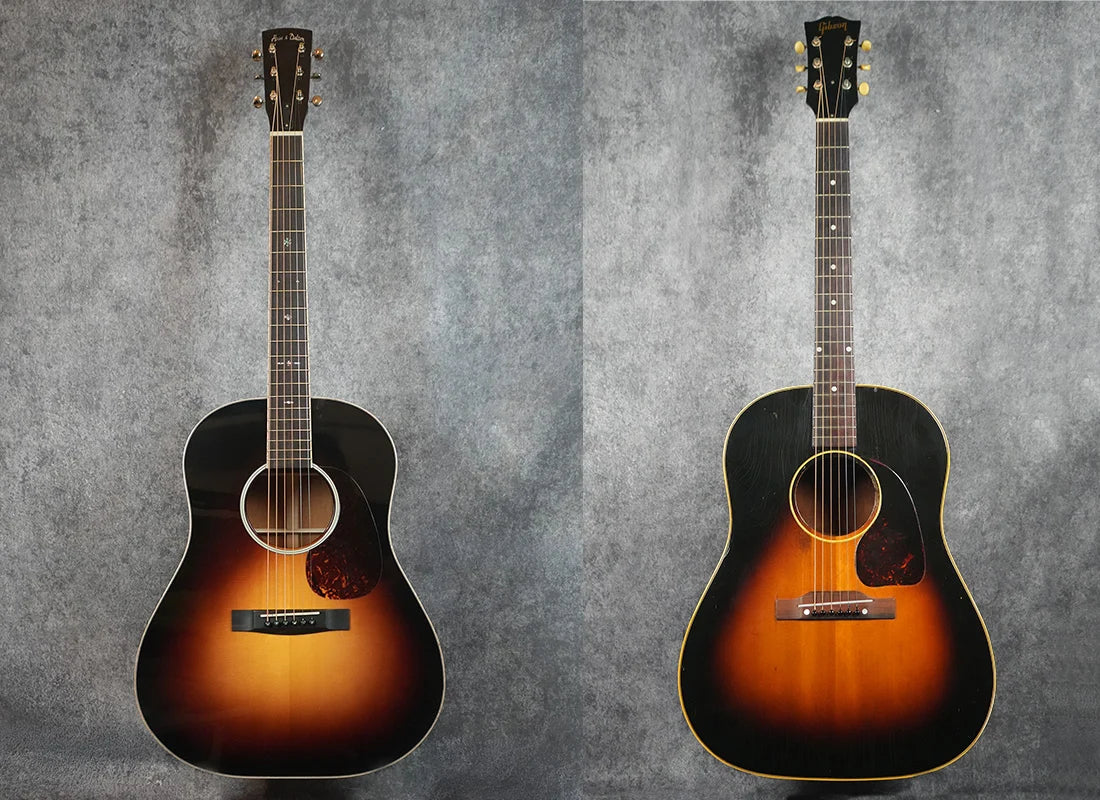
Why Humidity Control Matters for Your Guitar, Banjo, and Mandolin
Lower moisture levels accompany cooler temperatures. The most common repairs we saw in the winters in Chicago when I ran a stringed instrument repair shop were:
-
Top and back cracks
-
Sharp fret ends extending beyond the fingerboard
-
Buzzing strings attributed to shrunken tops of neck movement
Every fretted instrument on our walls is made of wood, and wood never stops moving. It soaks up moisture when the air is damp and gives it back when the air turns dry. In much of the country, that means a muggy summer followed by a winter of furnace-dried air that can push indoor humidity below 20%. Guitars, banjos, and mandolins are happiest at roughly 45–55% relative humidity. Keep them there, and they play and sound their best; let them drift too far for too long, and you're looking at a trip to the repair bench.
At Wood and Wire, Fine Fretted Instruments,, we installed a whole-shop humidifier that keeps our humidity at 45-50% all winter. At home,, I use a stand-alone humidifier that I sometimes have to refill daily. I also use Boveda humidity packs in all of my instruments.
Signs your instrument is too dry
Dryness shows up gradually, so learn to spot the early warnings:
-
Sharp fret ends. As the fingerboard shrinks, fret ends poke out past its edges and snag your hand as you slide up the neck.
-
Dropping action and new buzzes. A dry top sinks, lowering the strings until they rattle against the frets.
-
A sunken top. On guitars and mandolins, the area behind the bridge flattens or even dips.
-
Gaps and lifting. Binding pulls away, and seams or the fingerboard edge can separate.
-
Cracks. The costliest sign. Look along the grain near the soundhole or f-holes, on the back, and around a banjo's wooden neck and resonator.
-
Restless tuning and a thin, brittle tone. Banjo players may also notice the head tension changing with the seasons.
What a well-humidified instrument looks like
A healthy instrument has a top with a gentle, even arch (a slight rise behind the bridge is normal), fret ends that sit flush with the fingerboard, and action that stays consistent from season to season. It holds tune, sounds full and warm, and shows tight joints with no cracks. The easiest way to know for sure is a small digital hygrometer in the case, reading 45–55%.
Ways to humidify
-
Room humidifiers treat the whole space and are great for collections or wall hangers, but they need regular refilling and monitoring.
-
Soundhole humidifiers hang between the strings of a guitar, and slim tube styles slip into a mandolin's f-hole. Use them carefully: an overfilled sponge can drip onto the wood.
-
In-case humidifiers sit near the headstock or in a case compartment. Banjos have no soundhole, so humidity control happens in the case, usually under the neck or near the resonator.
-
Two-way humidity packs go a step further, adding or absorbing moisture to hold a set level automatically.
Whatever you choose, keep your instrument in its closed case during the dry months and check a hygrometer regularly.
Why Wood and Wire recommends Boveda Humidity Packs
Wood and Wire Fine Fretted Instruments recommends Boveda instrument humidifiers, and here's why:
-
True two-way control, all year. Boveda packs both add and remove moisture, keeping your instrument within the 40–60% range considered the industry standard for wooden instruments. They work through winter dryness and summer humidity alike, with no refills; simply swap packs about every three months. A high-absorbency version (B49HA) is available for players in consistently humid climates.
-
Safe and mess-free. Each pack holds food-grade salt and purified water sealed in a leakproof membrane, then rides inside a fabric holder that acts as a liquid barrier and is soft enough not to scratch your finish. No dripping sponges, no guesswork.
-
Made to fit all three instruments. The Large Instrument Starter Kit covers guitars and banjos, with a double holder that drapes into a soundhole or over the strings and a single holder for under the headstock or tailpiece. A Small Instrument Starter Kit suits smaller cases, such as mandolins, and includes display-case packs and an out-of-case holder for instruments that live on the wall.
Stop by the shop, and we'll help you pick the right Boveda kit for your instrument, or shop online for your Boveda large instrument starter pack.